

Santa Barbara Can Manage Scarcity or Choose Abundance
Santa Barbara’s rental debate has become a fight over who should pay for scarcity.
Tenants feel the pressure first. A rent increase can mean leaving a neighborhood, changing schools, adding a roommate, moving farther from work, or giving up on staying here altogether. For many renters, the market no longer feels expensive. It feels impossible.
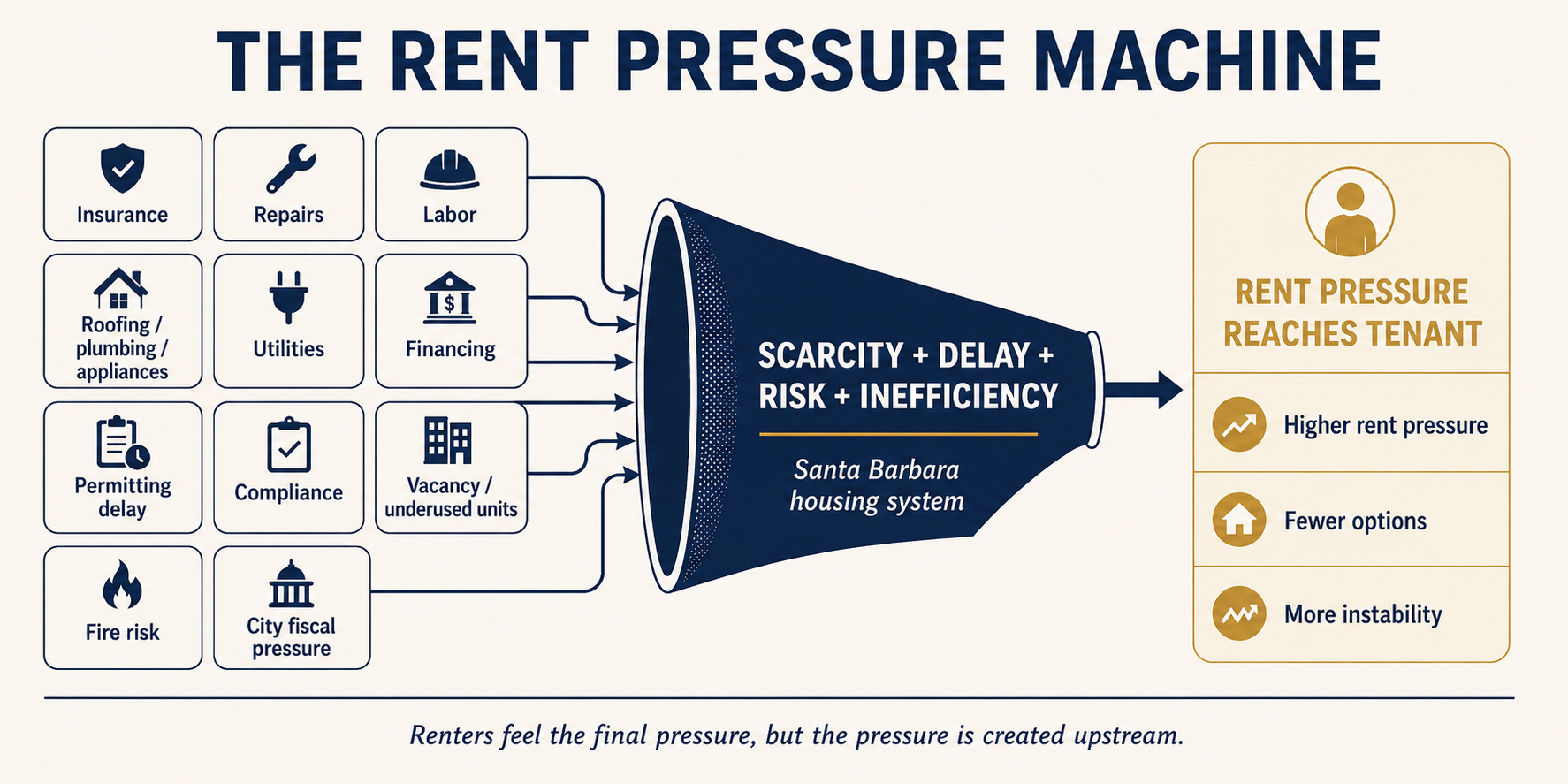
Housing providers feel a different pressure. Insurance is rising. Repairs are rising. Labor is rising. Plumbing, roofing, appliances, utilities, compliance, financing, and permitting delays all cost more. Many small landlords look at the debate and hear a simple accusation: you are the problem.
That framing is pulling Santa Barbara into a civil war it does not need.
The Fight Is Over Scarcity
The enemy is not the renter. The enemy is not the small landlord. The enemy is scarcity, delay, risk, and inefficiency — the broken machinery that turns every housing cost into a rent increase.
This is where the abundance argument matters.
In Abundance, Ezra Klein and Derek Thompson make a case that should land especially well in California: a society cannot protect working people if it cannot build, permit, produce, and deliver the things they need. The point is not that government should disappear. The point is that the government should be capable of delivering.
Rent Stabilization Manages Pressure After It Arrives
Santa Barbara has chosen scarcity for a long time. Sometimes deliberately. Sometimes by process. Sometimes, good intentions accumulate into veto points, delays, hearings, studies, design fights, infrastructure limits, neighborhood resistance, and a city government stretched thin by its own budget realities.
Then COVID changed the market.
Demand for Santa Barbara property rose as remote work, wealth migration, low interest rates, and lifestyle demand made coastal communities even more valuable. Supply did not respond at the same speed. Property values jumped. Insurance costs climbed. Construction and repair costs rose. Interest rates later reset higher. Older buildings needed more work. Small projects got caught in slow processes. Some housing remained vacant, seasonal, informal, or outside the long-term rental market.
The result is simple: tenants are absorbing the failures of the whole system.
That is why rent stabilization has political force. It is a response to real pain. A tenant facing a sudden increase does not want a lecture about macroeconomics. They want stability.
That instinct deserves respect.
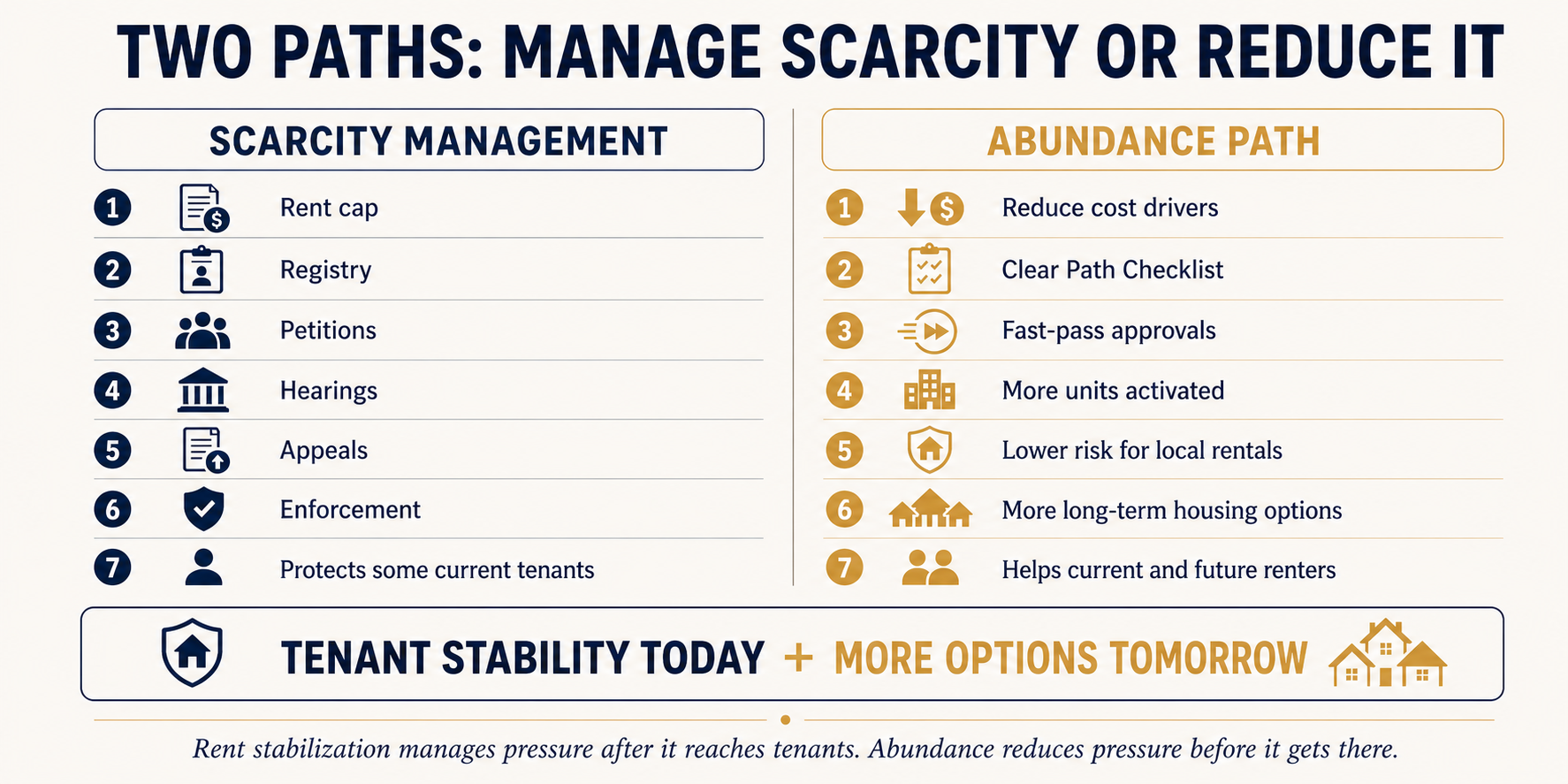
Rent stabilization is a scarcity-management tool. It limits how quickly rents can rise in covered units. It establishes rules, registries, petitions, hearings, appeals, enforcement mechanisms, fees, and a board or administrative structure to govern the system. It may protect some current tenants from sudden increases. That matters.
It also leaves the underlying machine largely untouched.
A rent cap does not lower insurance premiums. It does not repair a roof. It does not speed an ADU permit. It does not legalize a safe informal unit. It does not convert an illegal short-term rental back into long-term housing. It does not reduce plumbing costs. It does not make code compliance easier. It does not revive State Street. It does not strengthen city reserves. It does not make providing housing cheaper or less risky.
It regulates the pressure after the pressure has already reached the tenant.
Santa Barbara Needs an Abundance Path
The abundance path starts with a different question. Instead of asking only how to limit rent increases, ask how to reduce the costs that become rent increases in the first place.
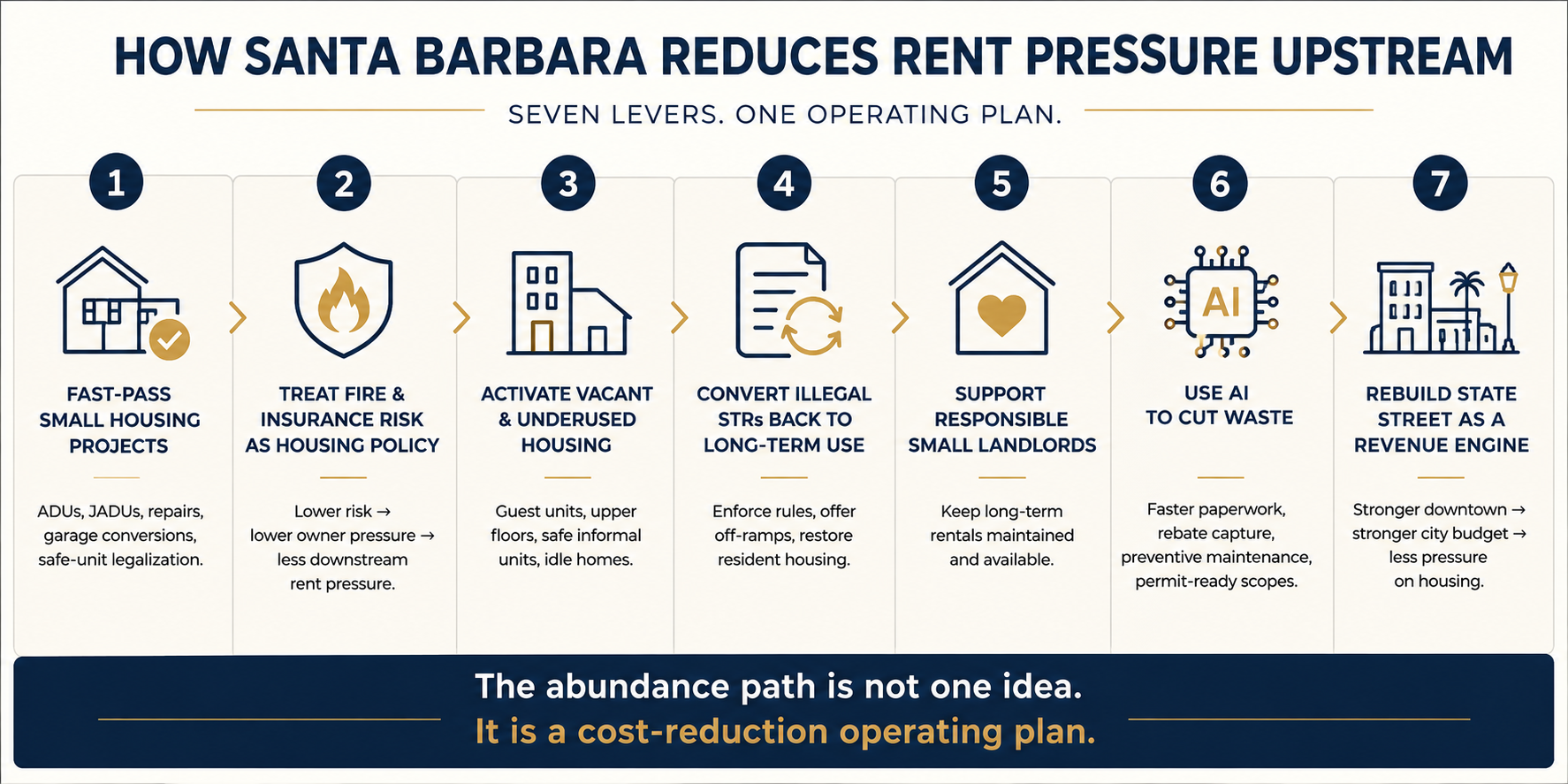
That is the purpose of a Housing Cost Reduction Agenda
1. Speed Small Housing Approvals
First, create a fast-pass system for ADUs, junior ADUs, renovations, garage conversions, habitability repairs, and safe-unit legalization. Delay is a housing tax. Every extra month in review adds carrying cost, lost rent, frustration, and uncertainty. If a small project meets clear standards, the city should move it quickly. High standards and slow processes are different things.
2. Treat Fire and Insurance Risk as Housing Policy
Second, treat fire and insurance risk as housing policy. Insurance is now part of the rent stack. If the city can improve fire response, water reliability, defensible space, home hardening, and public protection ratings, it should treat that work as an affordability lever. Lower risk means less pressure on owners, and less pressure on owners means less pressure moving downstream to tenants.
3. Activate Housing That Already Exists
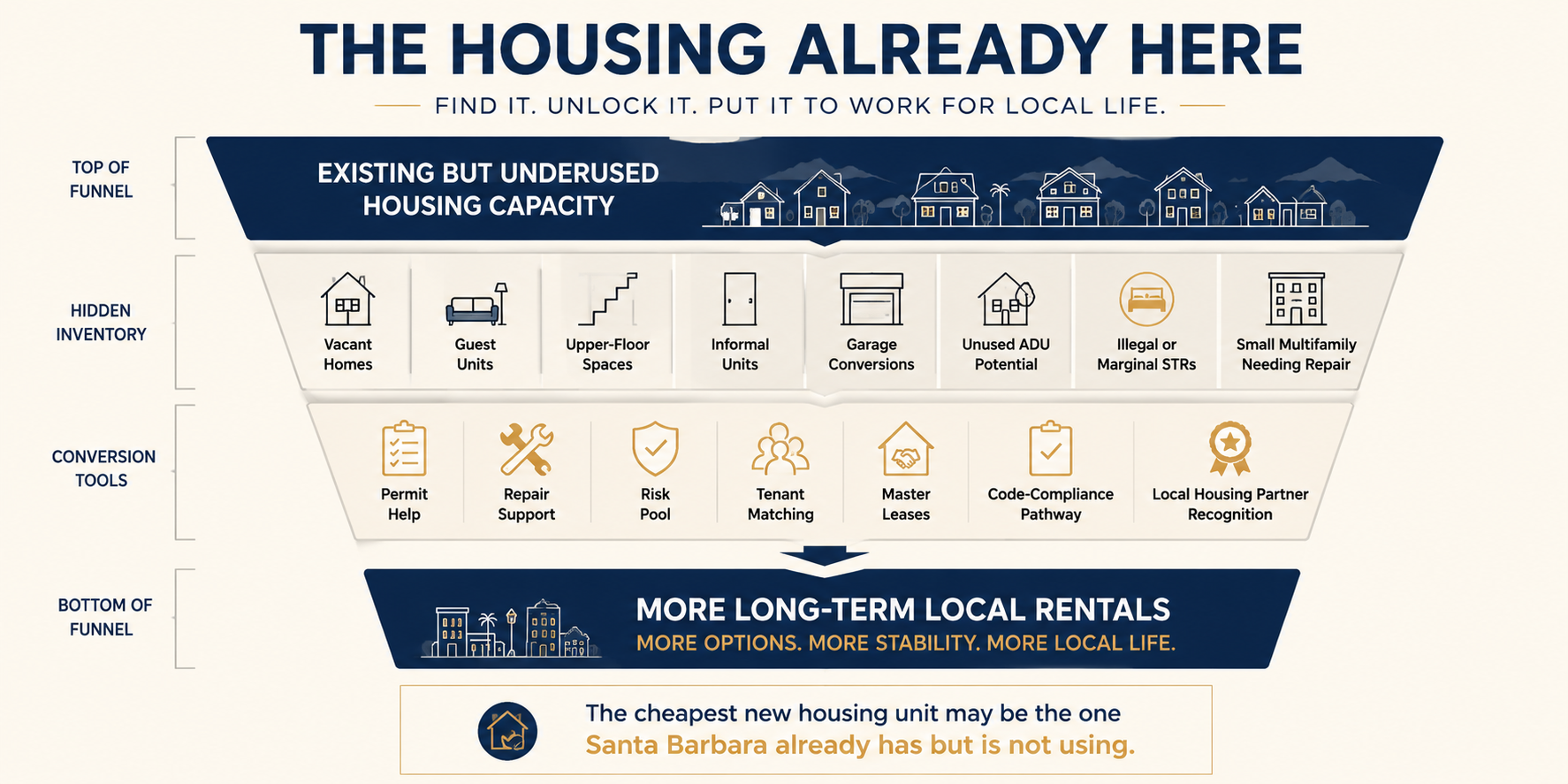
Third, activate vacant and underused housing. Santa Barbara should make it easier for owners to bring unused units, guest spaces, upper floors, safe informal units, and vacant homes into long-term local use. Use carrots first: repair support, tenant matching, risk protection, permit help, and clear rules. The cheapest housing unit may be the one already here but sitting unused.
4. Convert Non-Compliant or Marginal STRs Back Into Long-Term Housing
Fourth, convert non-compliant or marginal short-term rentals back into long-term housing. This should not become an anti-tourism crusade. Tourism supports local jobs and city revenue. But homes intended for residents should not quietly disappear from the long-term rental market. Enforce the rules and offer a dignified off-ramp: convert to long-term use, get help with compliance, and connect with local renters.
5. Support Small Landlords Who Preserve Long-Term Rentals
Fifth, support small landlords who preserve long-term rentals. This is not about asking renters to feel sorry for asset owners. It is about recognizing a market fact: when small landlords exit, renters often lose options. Units can sell, sit vacant, reset higher, convert to other uses, or move into more sophisticated ownership. A city that wants tenant stability should help responsible local owners maintain safe, long-term housing.
6. Use AI to Remove Waste
Sixth, use AI to remove waste. AI will not make shingles, copper, appliances, or skilled labor cheap. It can reduce bad paperwork, incomplete applications, missed rebates, emergency repairs, insurance documentation gaps, and confusing compliance. It can help owners diagnose maintenance issues earlier, prepare permit-ready scopes, compare bids, track utilities, and capture insurance discounts. The goal is not technology theater. The goal is lower overhead.
Downtown Vitality Is Housing Policy
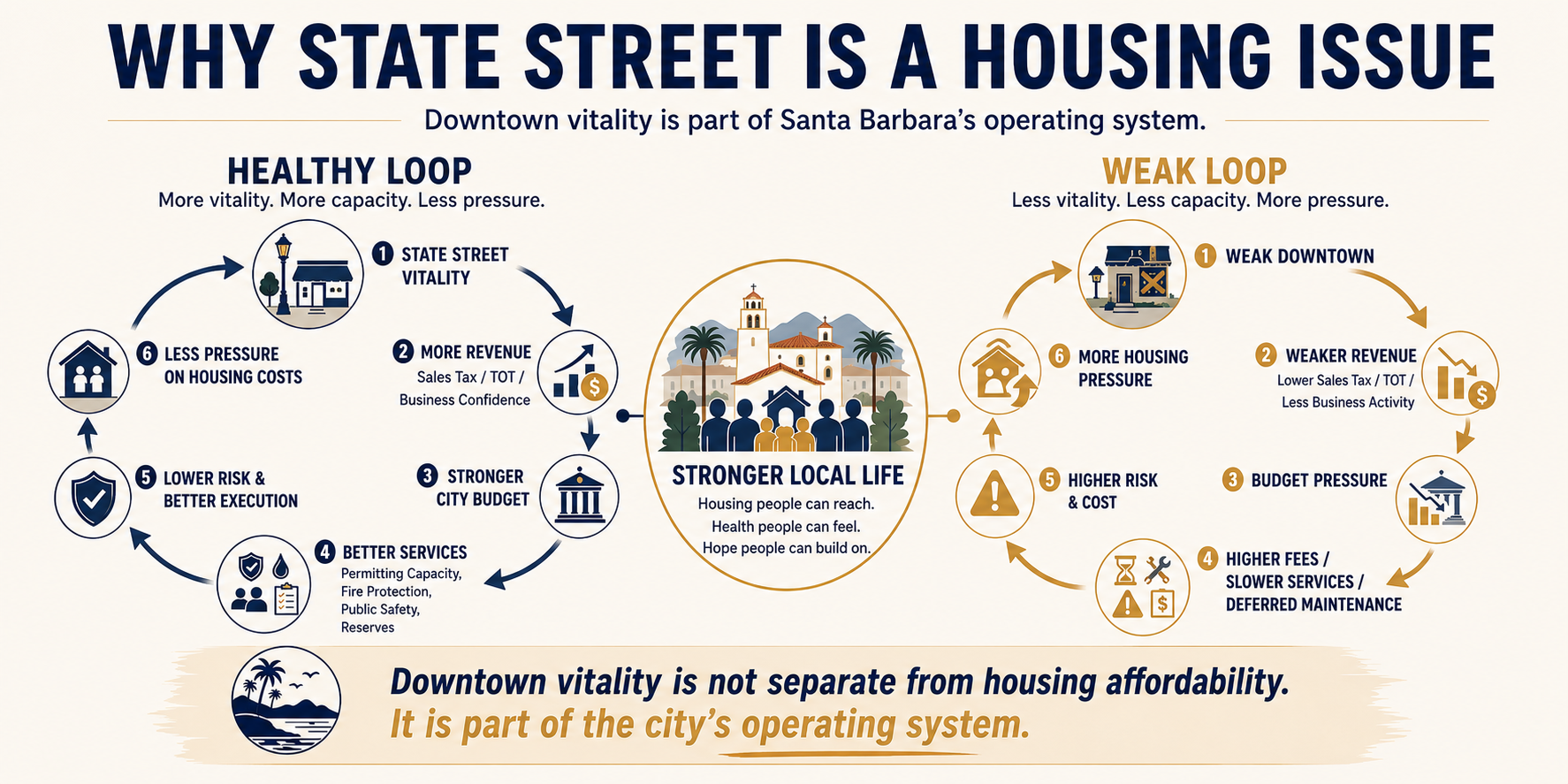
A weak downtown is a housing issue because a weak city budget eventually looks for revenue elsewhere. A stronger State Street means more sales tax revenue, more jobs, more local business income, more visitor confidence, and greater capacity to fund city services without squeezing housing even harder. Housing affordability and downtown vitality belong in the same conversation.
The Realistic Goal
This agenda will not cut everyone’s rent overnight. Serious policy should not promise that.
The realistic goal is stronger: slow rent growth, activate more units, reduce cost shocks, protect maintenance, keep small landlords in the long-term rental market, and create enough options that tenants regain leverage over time.
The city also has to be honest about money. Santa Barbara is already budget-constrained and below where it should be on reserves. Broad subsidy promises without revenue are not serious. Programs need funding sources: fast-pass fees, short-term rental enforcement revenue, state and federal grants, employer contributions, philanthropic housing funds, Measure C-eligible infrastructure investments, and downtown revenue growth.
Renters deserve stability. Future renters deserve options. Small landlords deserve a system in which providing housing is financially viable. City government deserves a plan that can be funded and measured.
The choice is clear.
Santa Barbara can manage scarcity with more rules after the pressure reaches tenants.
Or Santa Barbara can choose abundance by reducing the pressure before it gets there.
The Choice
Rent stabilization asks how to divide a shortage.
Abundance asks how to end one.
A serious city should be brave enough to protect people from instability today while rebuilding the capacity to deliver more housing, lower costs, stronger services, and a future where staying in Santa Barbara does not require winning a bidding war for scarcity.